Trocar Catheters About
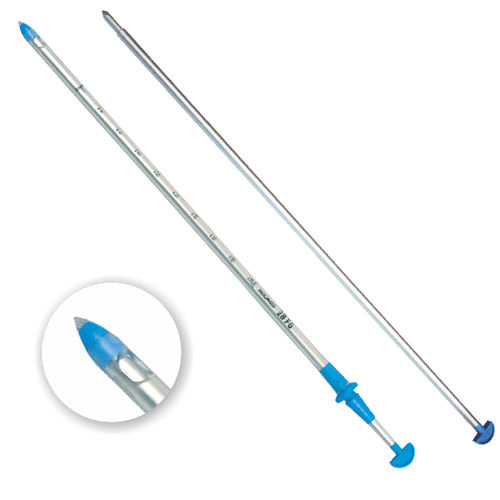
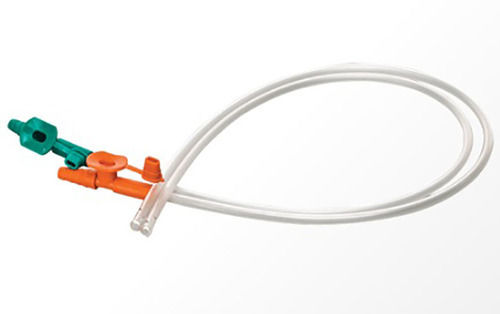
Trocar is a medical device that is made up of an obturator (which may be a metal or plastic sharpened or non-bladed tip), a cannula (basically a hollow tube), and a seal. Trocars are placed through the abdomen during laparoscopic surgery. The trocar functions as a portal for the subsequent placement of other instruments, such as graspers, scissors, staplers, etc.
Trocars are used in medicine to access and drain collections of fluid such as in a patient with hydrothorax.
Features:
- Specially designed for quick non operative pleural and chest drainage.
- Flat handle facilitates easy maneuverability.
- Large smooth drainage eyes for efficient drainage.
- Markings provided at 5, 10, 15 & 20 cm. from the distal tip to help ascertain depth of penetration.
- Proximal is fitted with tapered connector for easy connection to drainage bottle.
- Sterile, individually double packed in a peelable pouch.
- Size Available : FG 12, 16, 20, 24, 28 & 32
- Application : Cardiology,Anesthesia
Precision and Patient SafetyOur Trocar Catheter ensures high precision placement with clear graduated markings and a rounded, atraumatic tip. Sterilized using EO gas, it is latex-free, minimizing allergy risks. Every catheter is individually packed, maintaining sterility and supporting patient safety during thoracic, pleural, or abdominal drainage procedures.
Enhanced Visibility and VersatilityThe catheter incorporates a radio-opaque line for clear visibility under X-ray, aiding correct placement. Its universal connector adapts to various drainage systems, and flexible yet sturdy construction supports accurate, reliable fluid or air drainage for multiple clinical indications.
Convenient, Single-Use DesignDesigned for manual insertion, these lightweight, portable trocars require no power source and operate silently. Their disposable nature prevents cross-contamination, while the individually sealed blister pack preserves sterility for up to 3-5 years when stored properly.
FAQ's of Trocar Catheters:
Q: How is the Trocar Catheter inserted during a procedure?
A: The Trocar Catheter is inserted manually using the attached trocar to penetrate the cavity wall. The rounded, atraumatic tip helps reduce tissue trauma. Once placed, the catheter is connected to a drainage system via its universal connector, and the trocar is withdrawn.
Q: What types of procedures is this catheter suitable for?
A: It is suitable for thoracic, pleural, and abdominal drainage procedures where removal of air or fluid from body cavities is needed, such as pleural effusion, pneumothorax, or ascites management.
Q: When should this catheter be used, and by whom?
A: This catheter should be used during clinical scenarios requiring immediate drainage of air or fluid from body cavities. It must be used by trained healthcare professionals in a procedural setting, such as operating rooms, emergency departments, or intensive care units.
Q: Where should the Trocar Catheter be stored before use?
A: Store the catheter in a cool, dry place away from direct sunlight to preserve its sterility. The unopened blister or peel pack maintains sterility for 3-5 years as indicated by the shelf life.
Q: What are the advantages of the radio-opaque line on the catheter?
A: The integrated radio-opaque line provides clear visibility under X-ray, allowing clinicians to verify proper placement of the catheter within the cavity during imaging procedures.
Q: Is this catheter reusable?
A: No, the Trocar Catheter is designed for single-patient, single-use only. After use, it should be disposed of according to standard medical waste protocols to prevent cross-contamination.
Q: What are the benefits of using this catheter over traditional methods?
A: Benefits include high accuracy through graduated markings, atraumatic tip for patient comfort, radio-opaque line for placement verification, and enhanced infection control due to its sterile, disposable design.

 Send Inquiry



 Send Inquiry


 Send Inquiry


