Disposable Pressure Transducer Kit About
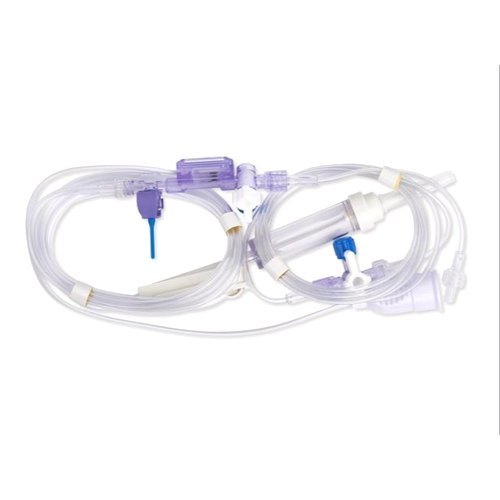
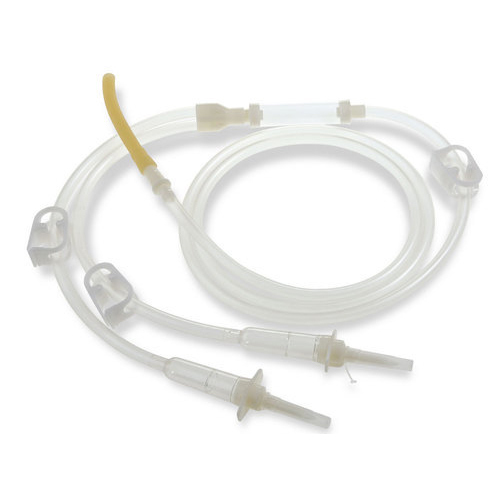
A Disposable Pressure Transducer (DPT) is indicated for pressure sensing during clinical invasive procedures without interfering with the patient blood flow and /or blood pressure.The sensor is in fluid communication with different body fluids.By mechanical connection the pressure is transferred to the sensing unit, which translates it to an electrical signal.The stopcock is used for zeroing the pressure monitor before operation.The flush device allows a continuous flow which is required for flushing blood from the monitoring line when connected to the patient assembly.Types of DPT Kits: Single DPT Kits, Double DPT KitComplete DPT Kit consists of the Following: Disposable Pressure Transducer with inbuilt Flush,Pressure Monitoring Lines, Stopcock,Infusion Set,Dead ender Caps
| FEATURES |
BENEFITS |
| Use of MEMS sensor chips |
Accurate transmission of pressure waves |
| Transparent Housing |
For easy detection of air bubbles and quick priming |
| A straight fluid path across sensor |
Provides easy priming with minimal waveform distortion |
| Automatic continuous flush/flow@3cc/hr or 30cc/hr |
Facilitates dynamic response testing of the monitoring system allowing rapid flushing of the Pressure Line after collection of blood sample |
| Preassembled customized kits |
User friendly providing easy connection to the patient |
| Multiple cable end options |
Compatible with most of the commonly used patient |
Reliable Monitoring for Patient SafetyThis transducer kit employs MEMS-based sensor technology, allowing for precise conversion of physiological blood pressure into electrical signals for real-time monitoring. Designed with compliance and accuracy in mind, it ensures high sensitivity and minimal drift, delivering dependable results in varied clinical situations from ICU to operating rooms.
Sterile and Ready-to-Use DesignEach kit arrives individually packaged in a sterile, easy-peel pouch, making setup efficient and reducing infection risks. EO sterilization and latex-free materials cater to varying patient sensitivities while supporting fast-paced medical environments. The kit is ready-to-use, eliminating time-consuming sterilization prior to procedures.
Versatile Application and CompatibilityEngineered for seamless integration with standard monitoring systems, the transducer kit fits both adult and pediatric settings. Its flexible 150 cm tubing and standard size allow ease of placement and adaptability. The kit's 3-way stopcock and Luer lock connector streamline clinical workflows, making it suitable for diverse hemodynamic monitoring needs.
FAQ's of Disposable Pressure Transducer Kit:
Q: How is the Disposable Pressure Transducer Kit used in clinical settings?
A: The kit is used to measure invasive blood pressure by converting physiological signals into electrical signals, which are then relayed to a patient monitor. It is suitable for critical care areas like the ICU, operating room, and other monitoring environments.
Q: What are the main benefits of using this transducer kit over reusable models?
A: Disposable kits eliminate the risk of cross-contamination, save time by avoiding reprocessing, and provide reliable accuracy with new, sterile components for each procedure. Additionally, the latex-free and EO-sterile design supports patient safety.
Q: When should this pressure transducer kit be used?
A: Use the kit during any invasive blood pressure monitoring in acute care settings, such as for critically ill patients, perioperative monitoring, or when precise hemodynamic assessment is required. It is compatible with both adult and pediatric patients.
Q: Where is this transducer kit commonly applied?
A: Common areas include intensive care units, critical care departments, operating theaters, and other settings where real-time hemodynamic monitoring is essential.
Q: What is the process for setting up the pressure transducer kit?
A: Remove the kit from its sterile packaging, connect it using the standard Luer lock, and ensure the 3-way stopcock is in the correct position. Prime the tubing with saline to remove air bubbles. Attach the sensor to the monitor according to compatibility guidelines.
Q: How does the device transmit blood pressure data?
A: The MEMS-based sensor converts the physical pressure into electrical signals. These signals are transmitted via compatible cables to a patient monitor for continuous, real-time display and recording; the kit itself does not include a direct display.

 Send Inquiry




 Send Inquiry


 Send Inquiry


