Angiographic Guidewire About
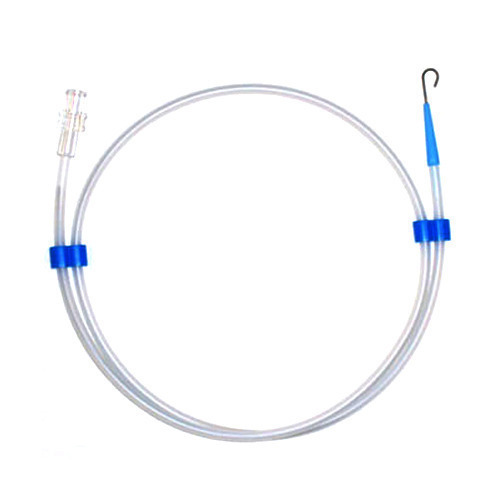
Stainless steel guidewire with or without PTFE coating. These products are offered as sterile CE-marked. Available in straight & jugular tip.
Guidewires are intended for use in the percutaneous introduction of catheters.
Precautions:
- Store in a cool, dark, dry place.
- The provided dispenser is the best means of storage and handling of the guidewire. Guidewires should be routinely inspected prior to use and discarded should any deformities be present in the guidewire.
- Use prior to the Use By date.
- Do not withdraw the guidewire through a metal cannula needle. Withdrawal may damage the guidewire or coating.
- If strong resistance is met during manipulation, discontinue the procedure and determine the cause for the resistance before proceeding. Avoid bending, kinking or modifying the shape of the wire.
Advanced Design for Enhanced NavigationThis guidewire combines a flexible stainless steel core with innovative tip technology and kink resistance, allowing clinicians precise torque control during challenging angiographic procedures. The radiopaque tip enhances X-ray visibility, ensuring optimal placement.
Versatile Coating & Broad CompatibilityOffered in hydrophilic or PTFE options, the guidewire delivers smooth vessel navigation with minimal friction. Its universal compatibility with most catheters and customizable sizing make it an adaptable tool for diverse clinical environments.
Safe, Sterile, and Ready for Immediate UseEach guidewire is sterile, single-packed, and latex-free, minimizing allergic risks and infections. Ready stock ensures immediate dispatch and a shelf life of up to three years from sterilization adds to its dependability for any medical facility.
FAQs of Angiographic Guidewire:
Q: How does the radiopaque tip enhance the performance of the angiographic guidewire?
A: The radiopaque tip significantly improves visibility under X-ray imaging, enabling clinicians to precisely track and place the guidewire during angiographic procedures. This feature enhances safety and accuracy in vascular navigation.
Q: What types of procedures is this guidewire suitable for?
A: It is designed for use in cardiovascular, radiology, and other interventional procedures where precise navigation and catheter placement are required.
Q: When should I choose a hydrophilic coating versus PTFE for my guidewire?
A: Hydrophilic-coated guidewires are preferred when reduced friction and smooth passage through vessels are needed. PTFE coatings are ideal for those seeking enhanced durability and consistent glide, depending on the clinical requirements.
Q: Where can this angiographic guidewire be used?
A: It can be used in various clinical settings, including hospitals and specialized diagnostic centers, for interventional and diagnostic angiographic procedures.
Q: What is the process for using this guidewire in a medical procedure?
A: After ensuring sterility and compatibility with the chosen catheter, clinicians manually advance the guidewire into the vascular pathway under imaging guidance, using its torque control and flexible tip to navigate to the desired location.
Q: How does the guidewire benefit medical professionals during procedures?
A: Features like the flexible tip, kink resistance, and torque control allow smoother navigation through complex vasculature, minimizing vessel trauma and procedure times.

 Send Inquiry



 Send Inquiry


 Send Inquiry


